What Property Management Software Costs to Build in 2026
Custom property management software runs $5k to $75k depending on which of the three modules you need. Cost broken down by module, the five drivers that move it, and the cases where buying beats building.
Custom property management software costs $5,000 to $75,000 to build, depending on how many of the three core modules you need — a listing site, an operations system, or marketing automation on top.
Search the same question and you will mostly be told $40,000 to $250,000+. That range is not wrong, but it is close to useless: it spans a five-fold difference and tells you nothing about which end you are at. It is wide because it averages a two-page rental listing site against a multi-tenant SaaS platform with a mobile app, an accounting engine, and a payments licence.
The number that matters is narrower, and you can work it out in about five minutes once you know which modules you actually need. Here is how the cost decomposes, using the same tiers we publish for every other build we do.
Cost by module
Property management software is not one system. It is three, and most teams need one or two rather than all of them. Pricing each separately is the difference between a useful estimate and a five-fold range.
| Module | What it covers | Range | Timeline |
|---|---|---|---|
| Listing website | Public property search, filters, listing pages, enquiry and viewing requests, structured data for search visibility | $5k–$12k | 3–5 weeks |
| Operations & automation | Tenant messaging, maintenance triage, work orders, lease reminders, scheduled notifications, role-based access | $12k–$30k | 5–9 weeks |
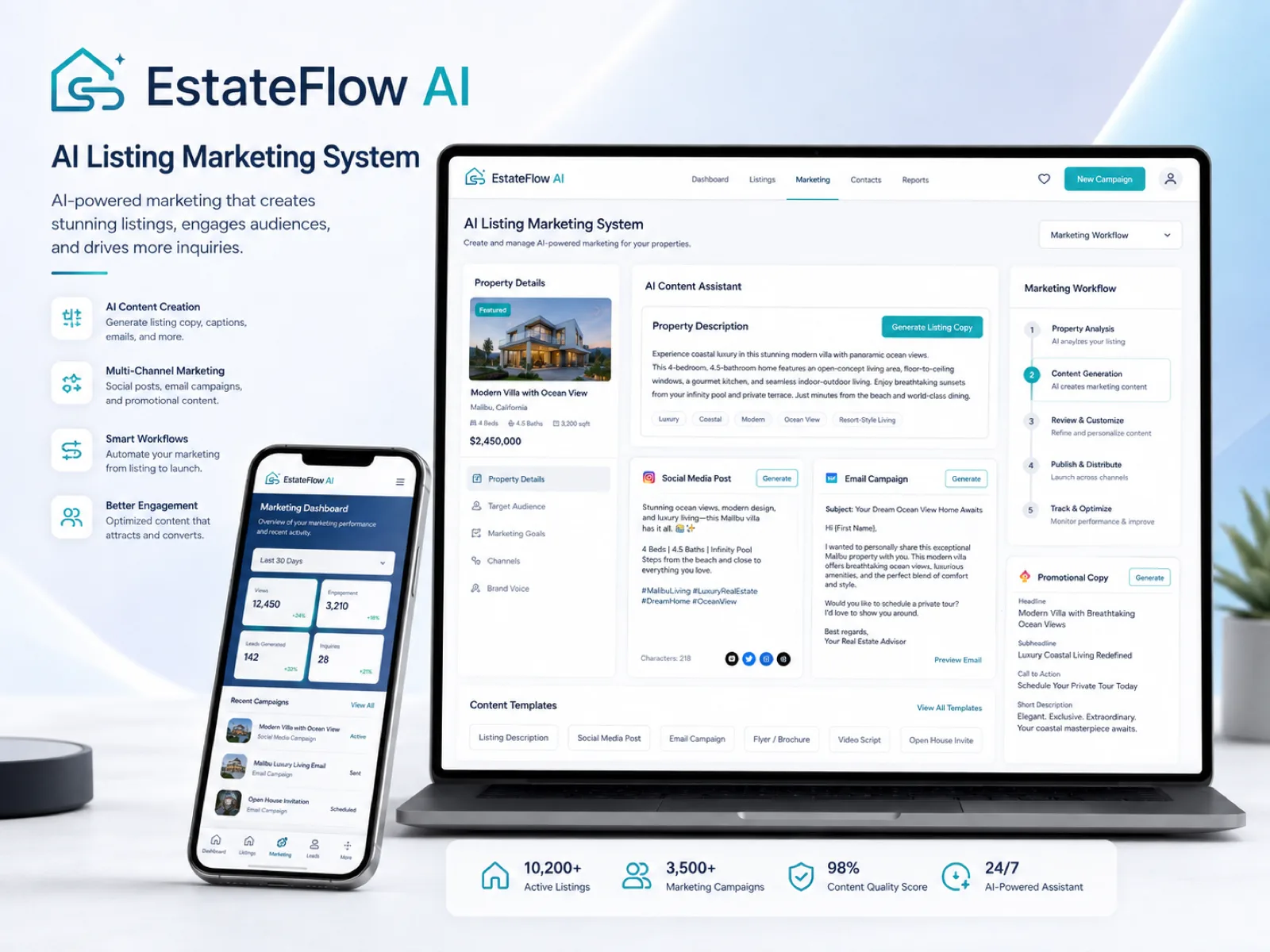
| AI listing marketing | Generated descriptions, social captions, email campaigns, drawn from the property record with human review before publishing | $5k–$12k | 3–5 weeks |
| All three, integrated | One shared property record behind all three, so data is entered once and stays consistent across listing, operations and marketing | $30k–$75k | 10–16 weeks |
The integrated figure is not the sum of the parts, and it is worth understanding why. Building three modules on shared data costs less than three separate builds, because the property model, authentication and infrastructure are done once. It costs more than any single module, because the integration work is real and the testing surface is larger.
What actually moves the number
Within a module, five things decide whether you land at the bottom or the top of its range. Four of them are yours to control.
1. Integrations
The single biggest driver, every time. A listing site that stands alone is straightforward. One that syncs to a portal feed, pushes to a CRM, and pulls availability from an existing system is three integration projects wearing a trench coat. Each external system adds scoping, error handling, and a permanent maintenance obligation when their API changes.
2. Payments and accounting
Rent collection sounds like one feature and behaves like a subsystem. Once money moves you inherit reconciliation, failed-payment handling, partial payments, late fees, refunds, and an audit trail. If you need full ledger accounting rather than payment capture, that is where budgets move from the middle tier to the top of it — and it is often the point where buying beats building.
3. Native mobile
A responsive web app covers most tenant and manager workflows. Native iOS and Android apps roughly double front-end effort and add app store review cycles to every release. Worth it if maintenance staff work offline in buildings with poor signal. Rarely worth it otherwise, and it is the requirement most often included by default and never used.
4. Multi-tenancy
Software for your own portfolio is one thing. Software other property companies will log into is a different product, with tenant isolation, per-account configuration, billing, and support tooling. If you intend to sell it later, say so at the start — retrofitting multi-tenancy is substantially more expensive than designing for it.
5. Data readiness
The one nobody budgets for. If your property data lives in spreadsheets with inconsistent addresses and three different conventions for unit numbers, cleaning and migrating it is real work that happens before anything gets built. We have seen this add weeks to projects that were otherwise well scoped.
When you should not build this
AppFolio, Buildium, Yardi and DoorLoop exist, they are mature, and for a lot of portfolios they are the right answer. Building custom is worse than buying when:
You need standard accounting. Rent ledgers, owner statements and tax reporting are solved problems with regulatory edges. Rebuilding them is expensive and gains you nothing.
Your portfolio is small. Under roughly fifty units, a subscription will cost less than a build for years, and you can switch if it stops fitting.
Your process is ordinary. If off-the-shelf workflows match how you work, matching them in custom software is paying for a thing you already have.
Building wins when the opposite is true: your workflow is genuinely unusual, the tools force you into expensive manual workarounds, you need integrations no vendor offers, or you intend to sell the software itself. We will tell you which situation you are in before quoting — it is a short conversation and it saves both sides a long one.
What we would build first
If the budget only covers one module, it is usually operations, not the public website.
The listing site is the visible part and the part clients ask for first. But teams rarely lose hours to publishing; they lose them to coordinating maintenance, chasing contractors, answering the same tenant questions, and remembering which lease expires next month. Automating that path returns time immediately, and the time is measurable in a way that a redesigned listing page is not.
The AI marketing module is the cheapest of the three and the easiest to add later, because it reads from the property record and writes to channels. It does not need to exist on day one.
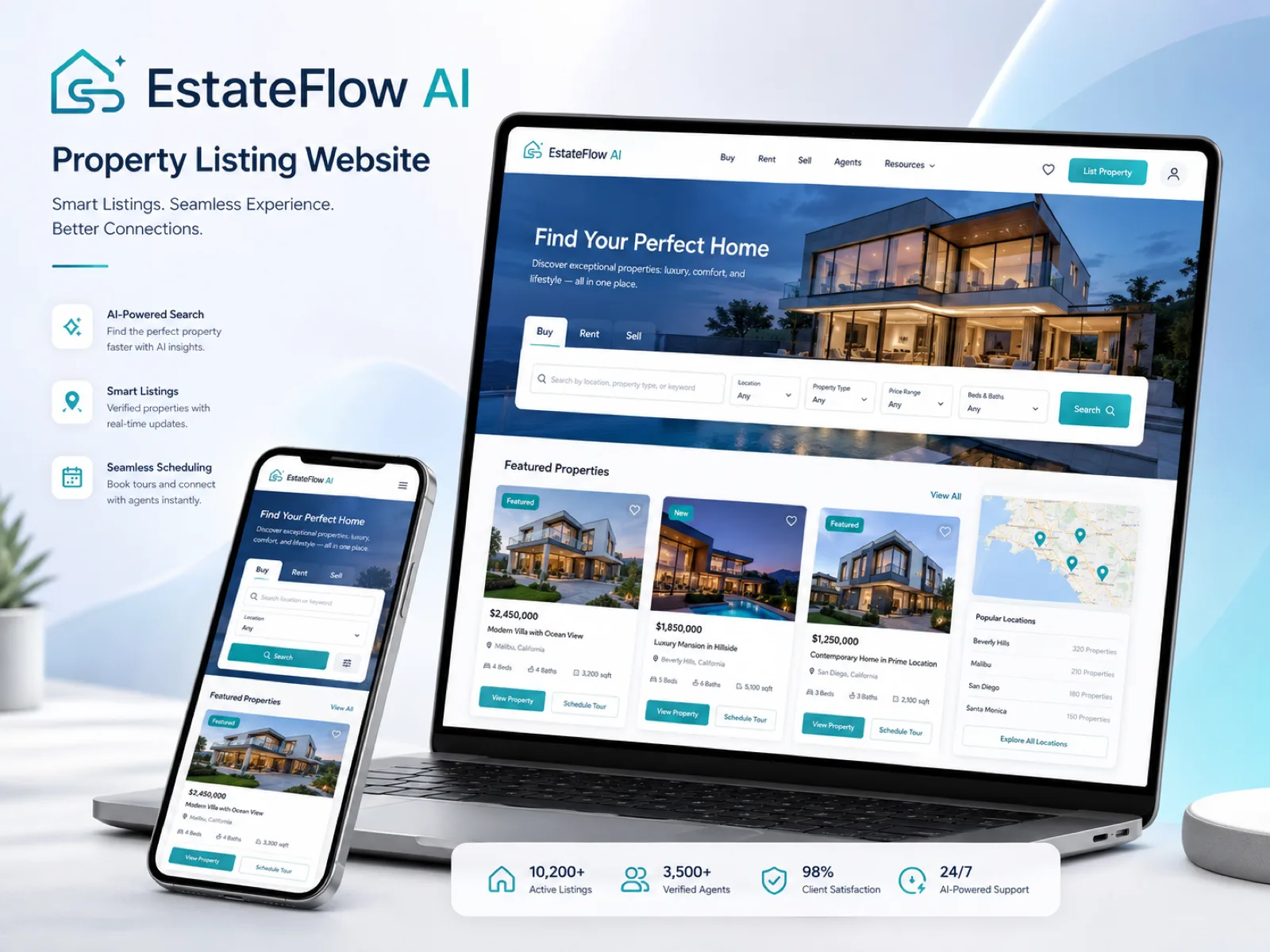
We built EstateFlow AI as all three modules on one shared record — that post walks through what each one does and how they fit together.
Ahmad R.
Engineer at ProCoders. Spends most of the day shipping production AI systems for clients across SaaS, FinTech, and consumer. Writes here when something is worth a writeup.
Connect with Ahmad R. on LinkedIn →