
AI Real Estate Platform Development: Inside EstateFlow AI
We built EstateFlow AI to collapse the real estate tool stack: listings, property management automation and AI listing marketing on one shared property record. What each module does, and which one is worth building first.
Most real estate teams don’t lose deals because their listings are bad. They lose time — and then deals — because the work is spread across five tools that don’t talk to each other.
A listing lives on the website. Tenant requests arrive by WhatsApp and email. Work orders sit in a spreadsheet. Marketing copy gets written from scratch every time, usually by whoever is least busy that afternoon. Each of those tools is fine on its own. Together they create the actual problem: the same property data is re-entered four times, and nobody is certain which copy of it is current.
We built EstateFlow AI to collapse that stack. It is one platform covering three jobs a property business does every day — publishing listings, running the operations behind them, and marketing them — with AI applied where it removes repetitive work rather than where it sounds impressive.
Three systems, one platform
EstateFlow AI is built as three modules on shared property data. That shared layer is the point: a property is entered once, and the listing page, the maintenance workflow, and the marketing copy all read from the same record.
1. Property listing website
The public-facing side. Buyers and renters search by location, property type, price range, and beds or baths, then move straight into scheduling a viewing. Listings carry the detail that decides whether an enquiry happens at all — imagery, pricing, location context, and specifications — and the search layer is built to narrow a large catalogue quickly rather than return everything and hope.
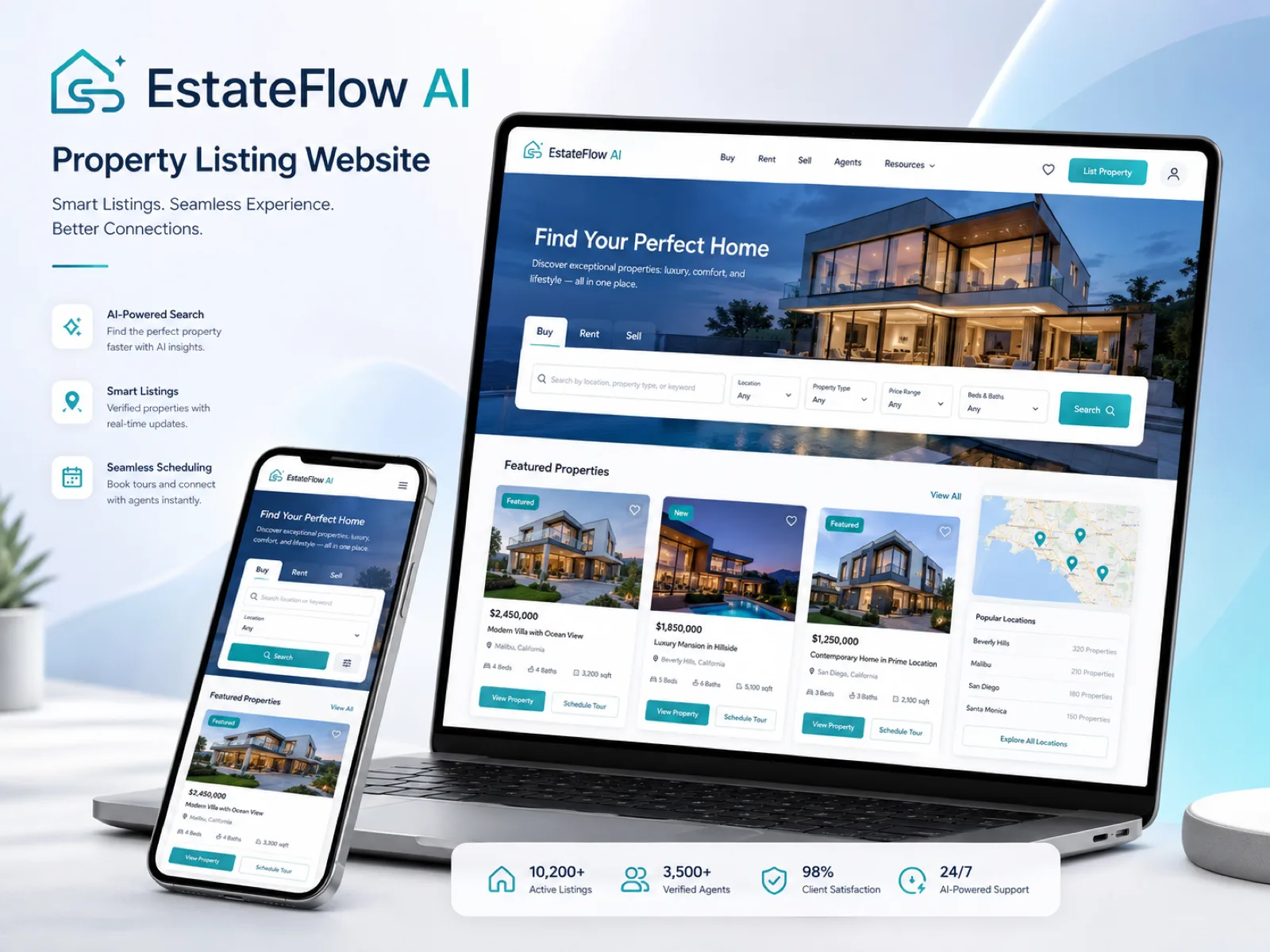
Two details matter more than they look. The search filters sit above the fold and are usable on a phone without a second tap — most property searches start on mobile, and a filter panel hidden behind a menu quietly costs enquiries. And every listing has its own page with proper structured data, so a property can appear correctly in search results rather than being trapped inside a JavaScript search widget that crawlers can’t read.
2. Property management automation
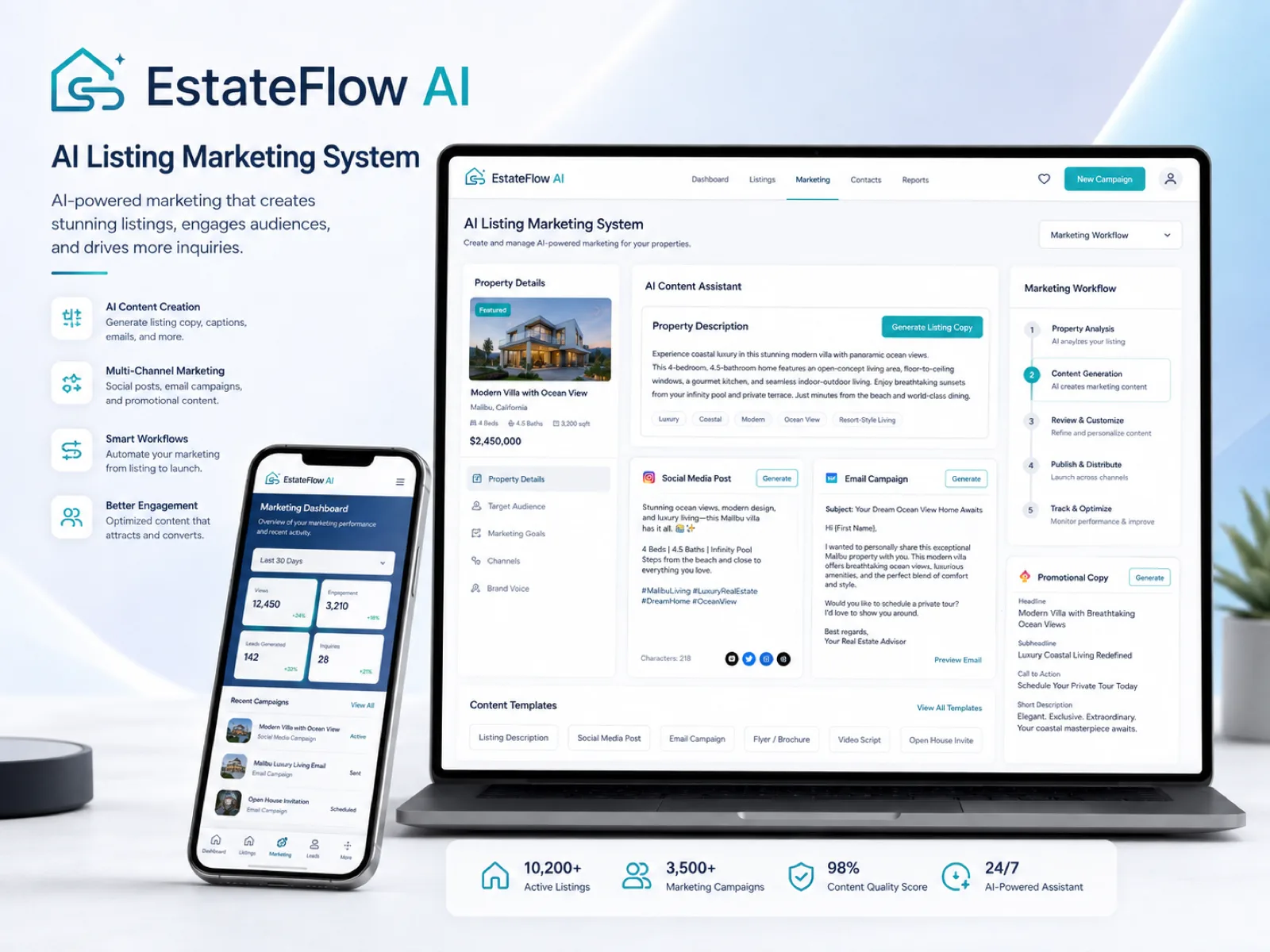
The operational side, and the module that saves the most hours. Tenant messages, maintenance requests, work orders, lease reminders, and notifications run through one dashboard instead of four inboxes.
The automation is deliberately unglamorous. A maintenance request arrives and is triaged by urgency. A work order is created, assigned, and tracked through to completion. Lease expiries generate reminders before they become emergencies. Rent and inspection notices go out on schedule without anyone remembering to send them. None of that is difficult individually — it is the accumulation of small manual steps that eats a property manager’s week.
3. AI listing marketing
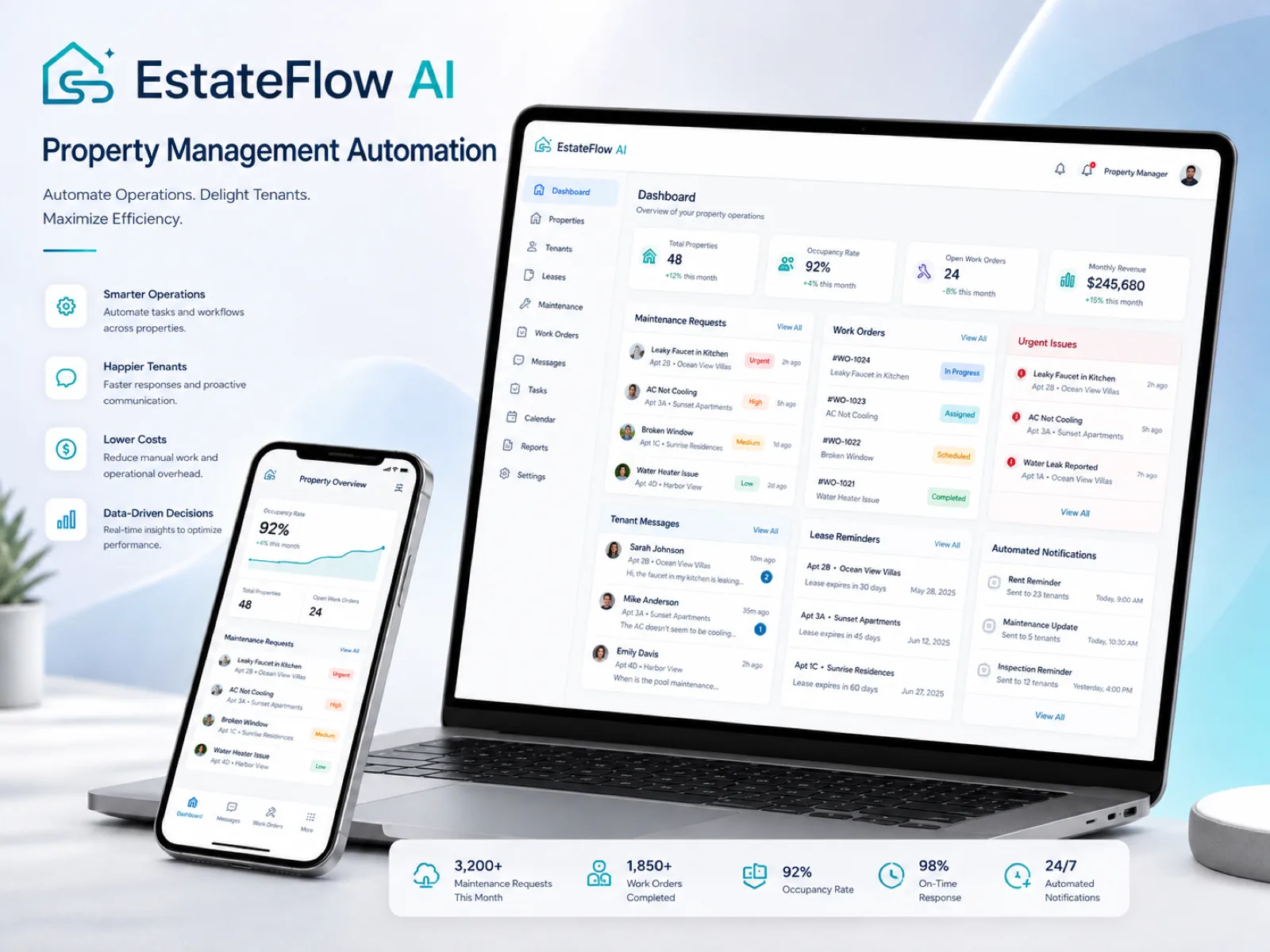
The third module generates the marketing assets a listing needs: property descriptions, social captions, email campaigns, and promotional copy — drawn from the property record rather than from a blank page.
This is where AI earns its place. Writing a competent listing description takes fifteen minutes. Writing forty of them takes a day nobody has, so in practice they get written badly or copied from the last one. Pulling beds, baths, square footage, location and features from the record and drafting from there turns that into a review-and-edit task instead of a writing task.
Why one platform instead of three subscriptions
You can buy each of these separately. A listing site from one vendor, property management software from another, an AI copywriting tool on top. Plenty of teams do, and for a small portfolio it works.
It stops working for three reasons.
Data drift. The same property exists in three systems with three slightly different descriptions. The listing says four bedrooms, the management system says three plus a study, and the marketing copy was written from a version that predates the renovation.
Nothing compounds. A maintenance history that never reaches the listing side can’t tell you which properties generate the most support load. Enquiry data that never reaches operations can’t tell you which listings actually convert.
The integration tax. Connecting three tools is real engineering work, and it is work you repeat every time one of them changes its API. Teams usually end up not integrating at all, and paying for it in manual re-entry instead.
What a build like this actually involves
If you are weighing something similar, the useful question isn’t which features to list — it’s which of the three modules earns its place first.
In most cases it is the operations module, not the public website. A listing site is visible and feels urgent, but if your team is drowning it is usually drowning in maintenance coordination and tenant messages, not in publishing. The listing site is the part clients ask for first and the operations module is the part that gives back the most hours.
The marketing module is the cheapest of the three to build and the easiest to add later, because it reads from the property record and writes to channels — it doesn’t need to be there on day one.
Scoping matters more than stack. The failure mode on platform builds is not choosing the wrong framework; it is building all three modules at half depth simultaneously and shipping something where nothing is finished. Sequencing them, with a working release at each stage, is what keeps the project deliverable.
Where AI belongs in real estate software
The honest version: most of the value in a platform like this comes from removing manual steps, not from the AI. Automated work-order routing and scheduled lease reminders save more hours per week than content generation does. The AI is genuinely useful for the writing task, which is high-volume, repetitive, and low-stakes once a human reviews it.
That ordering is worth holding on to when you scope your own build. AI features demo well and are easy to sell internally. Automation of the boring path is what people notice three months later, when the Friday afternoon that used to disappear into chasing maintenance updates is simply free.
If you are considering a custom real estate platform — listings, operations, marketing, or all three — we’re happy to talk through how it would be scoped. Start with a conversation about what you’re running now, and we’ll tell you which module is worth building first, including when the answer is that off-the-shelf software would serve you better.
Ahmad R.
Engineer at ProCoders. Spends most of the day shipping production AI systems for clients across SaaS, FinTech, and consumer. Writes here when something is worth a writeup.
Connect with Ahmad R. on LinkedIn →